
"Sustainable" is the word that comes to mind when considering how to repurpose the brine left in that jar of olives; what might have been discarded is turned into a functional, flavor-building tool that is perfect for brining roast chicken. And here, flavor is even more enhanced when filling the cavity with citrus and herbs and massaging herb butter generously under the skin of the chicken. The result is a chicken that is beautifully seasoned without the need for heavy salting.
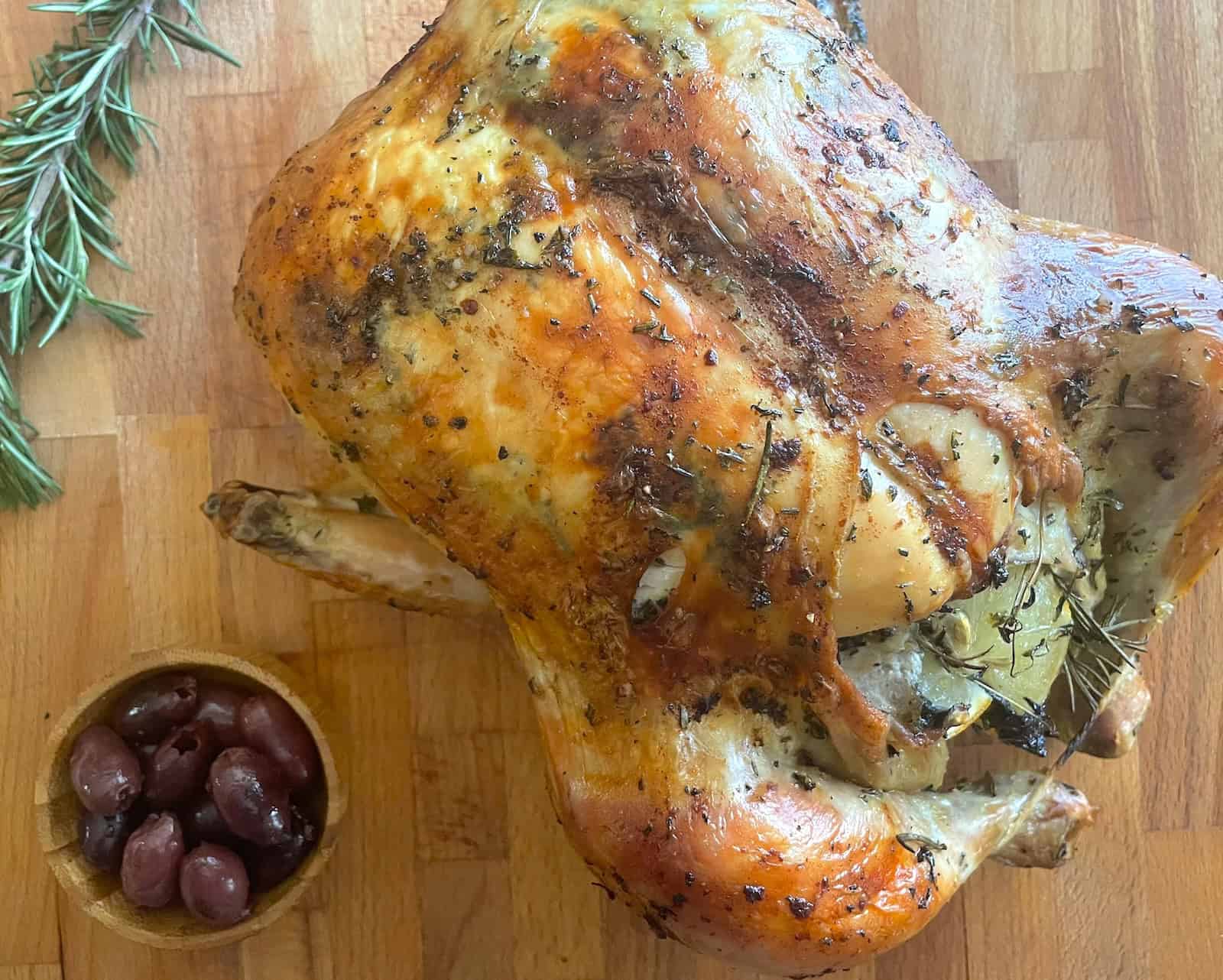
Olive brine is a somewhat unassuming, yet transformative ingredient. For sure, it is humble, and a little salty, and oftentimes discarded once the olives are gone, but not in my kitchen where the jars maintain a coveted place in my fridge long after the olives are gone.
At its core, olive brine is simply a seasoned salt solution. It’s infused not just with sodium, but with the subtle complexities remaining from the olives themselves—grassy, slightly fermented, sometimes garlicky or herbal depending on the kind of olive.
When chicken is soaked in olive brine, there is a transformative culinary process that occurs where the salt within the brine, enhanced by the olive's natural oils and acidity, act together to restructure muscle proteins, allowing them to retain moisture while simultaneously infusing the chicken with a savory and umami-rich flavor.
I love a roast chicken for its versatility. It can serve as the centerpiece main course for Sunday dinner and be repurposed over the coming days. Toss it into a salad. Turn it into stock and soup -- like my Lemon Chicken, Mushroom & Wild Rice Soup. Shred the chicken and tuck it into a quesadilla. Or transform it into a flavorful chicken salad like my Curried Chicken Salad.
Ingredients
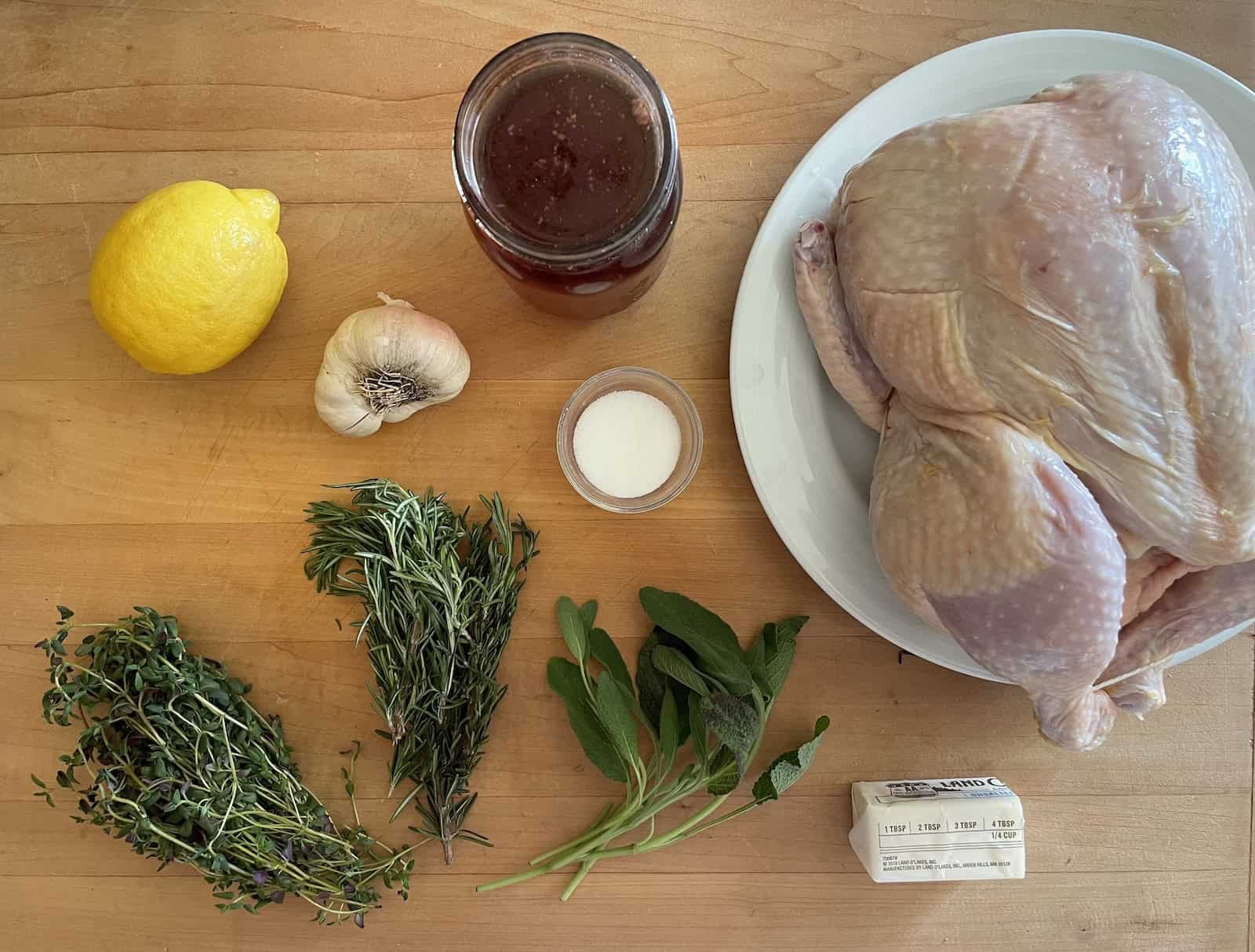
- roasting chicken
- olive brine/juice (substitute pickle brine)
- sugar
- butter
- thyme
- rosemary
- sage
- lemon
- garlic
See recipe card for quantities.
Jump to RecipeInstructions
Preheat oven to 375°F. Remove giblets from chicken.
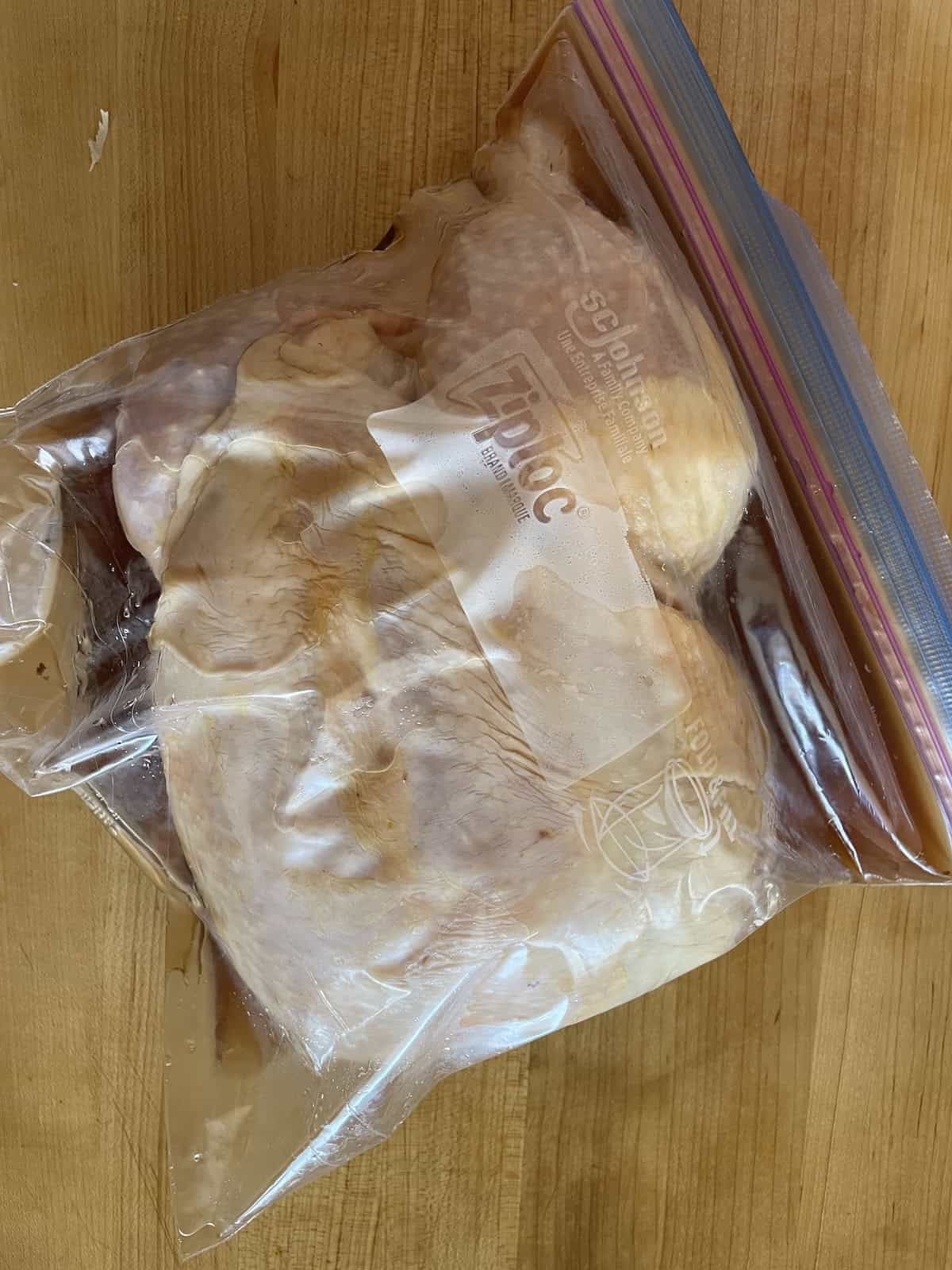
Place chicken in an airtight container or zipper bag. Whisk sugar into the olive brine and pour over the chicken. Seal the container or bag and place in the refrigerator for 4 hour or overnight, turning halfway through.
Remove from the refrigerator 30 minutes before prepping.
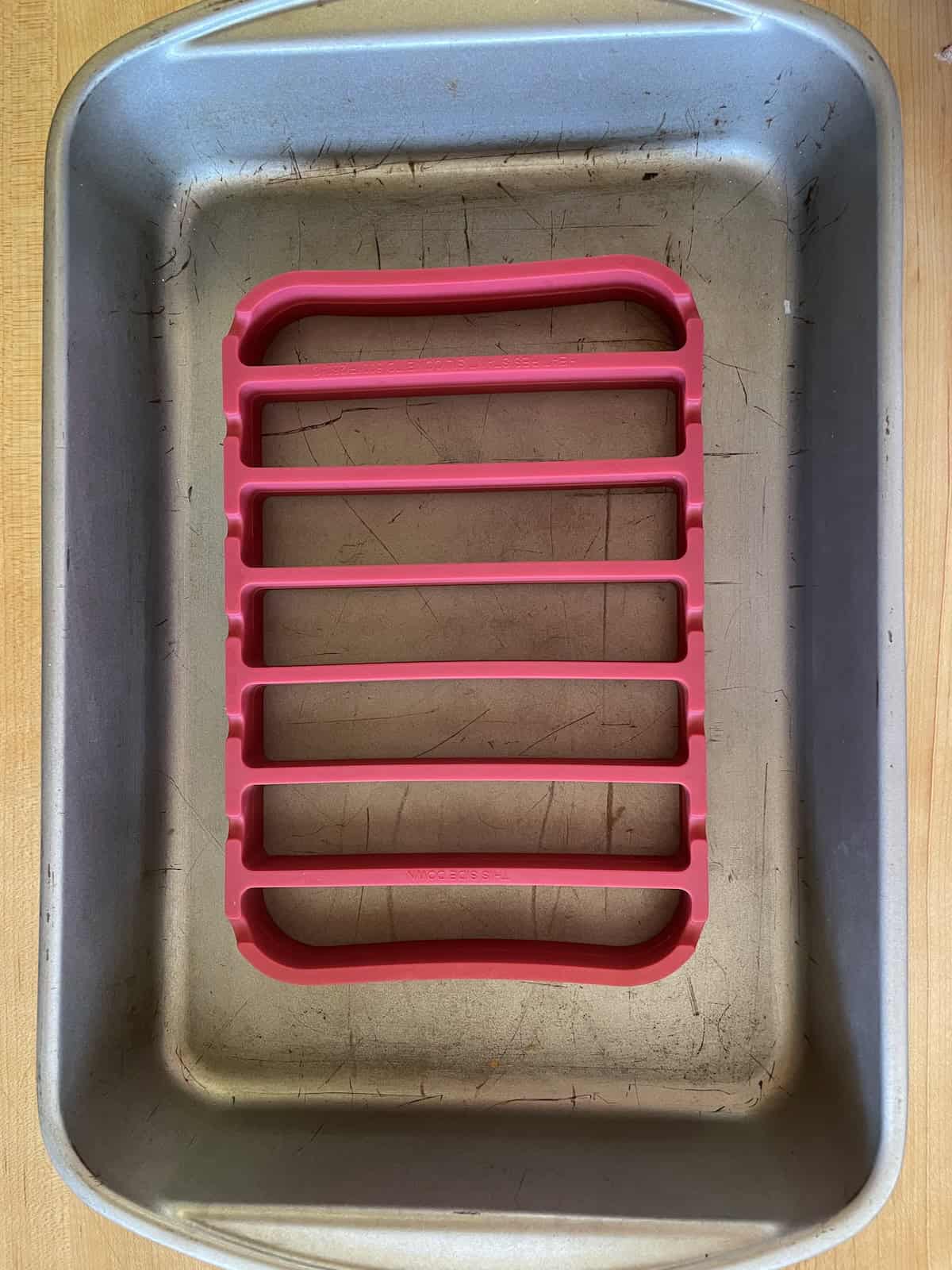
Place a rack in a roasting pan, cast iron skillet or 9" x 13" baking pan.
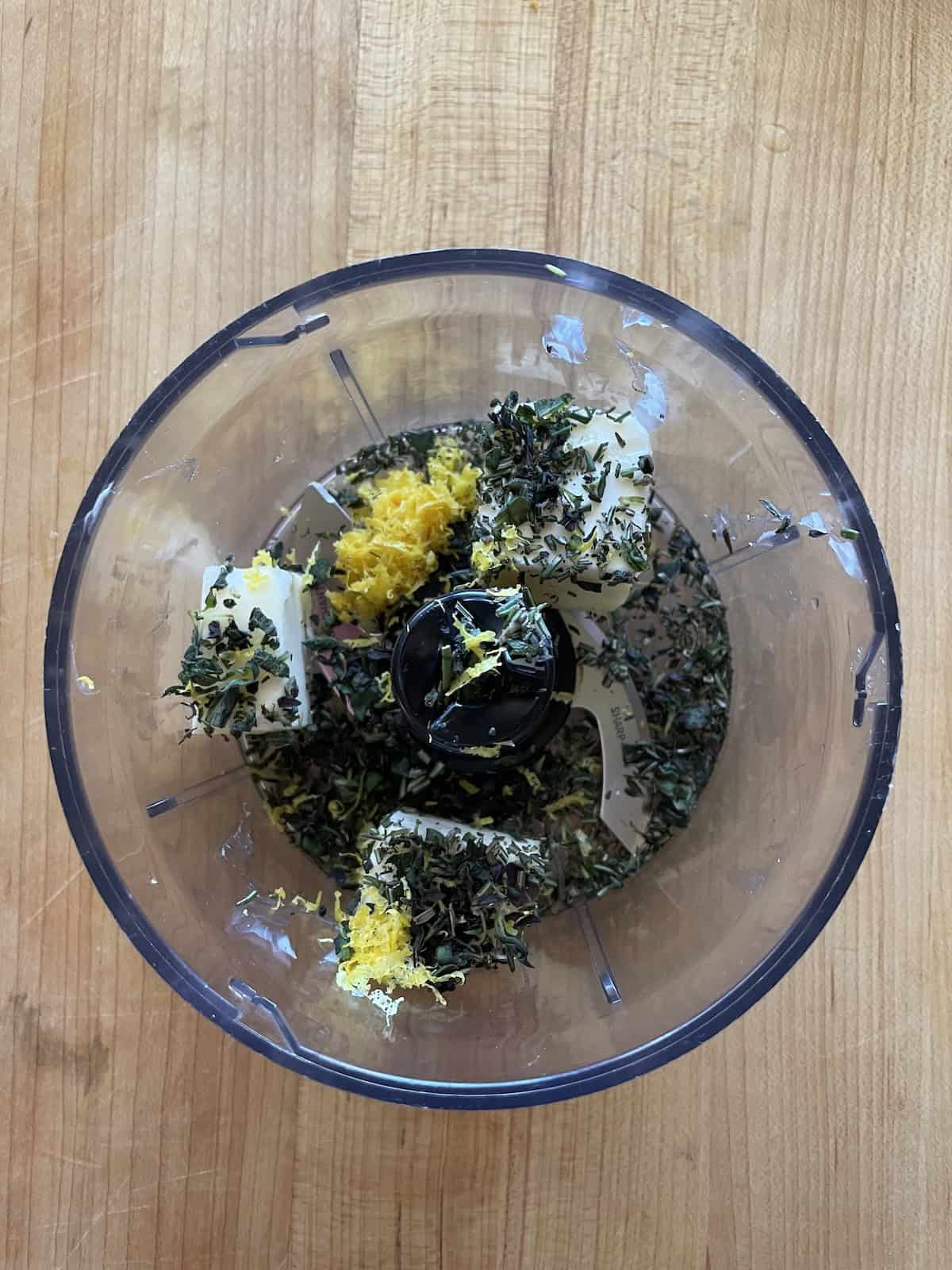
In the bowl of a food processor, add the minced thyme, rosemary, sage and lemon zest and butter.
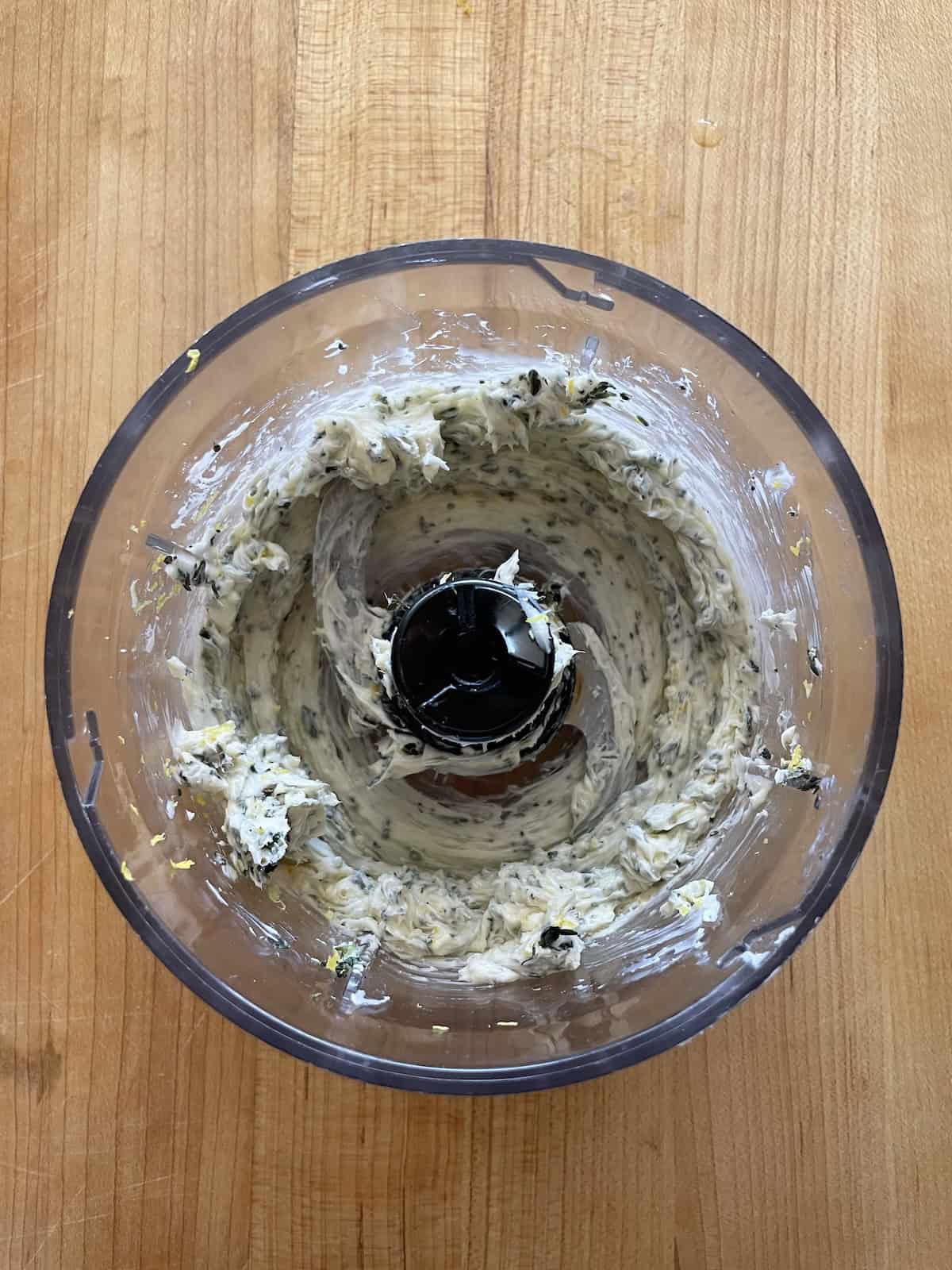
Mix until combined. (This process can be done by hand in a small bowl.)
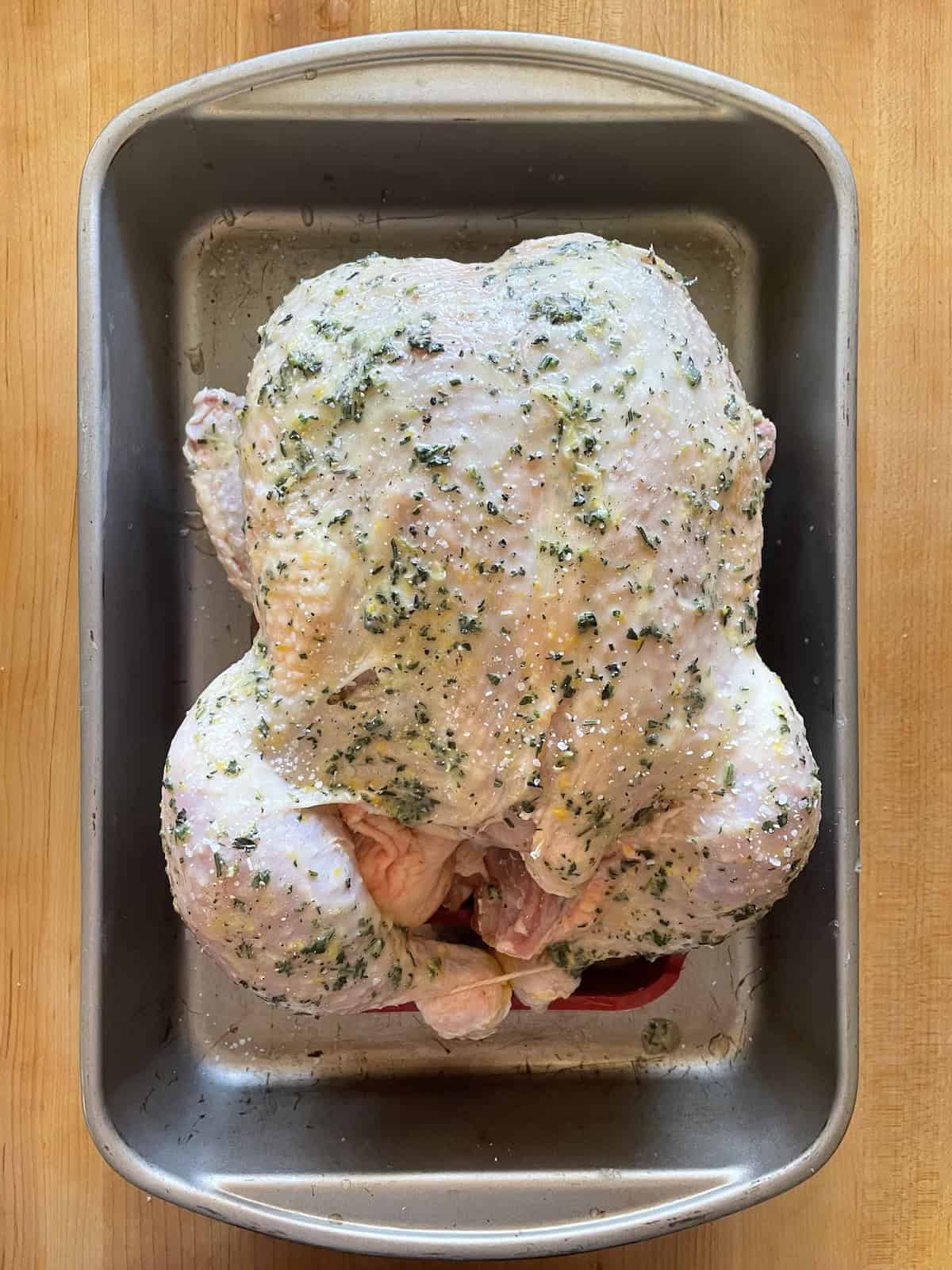
Lightly salt and pepper the inside and outside of the chicken. (The brine has salt.)
Gently separate the skin from the chicken breast, creating a pocket. Spread a few tablespoons of herb butter evenly over the breast meat, followed by coating the outside of the chicken with remaining herb butter.
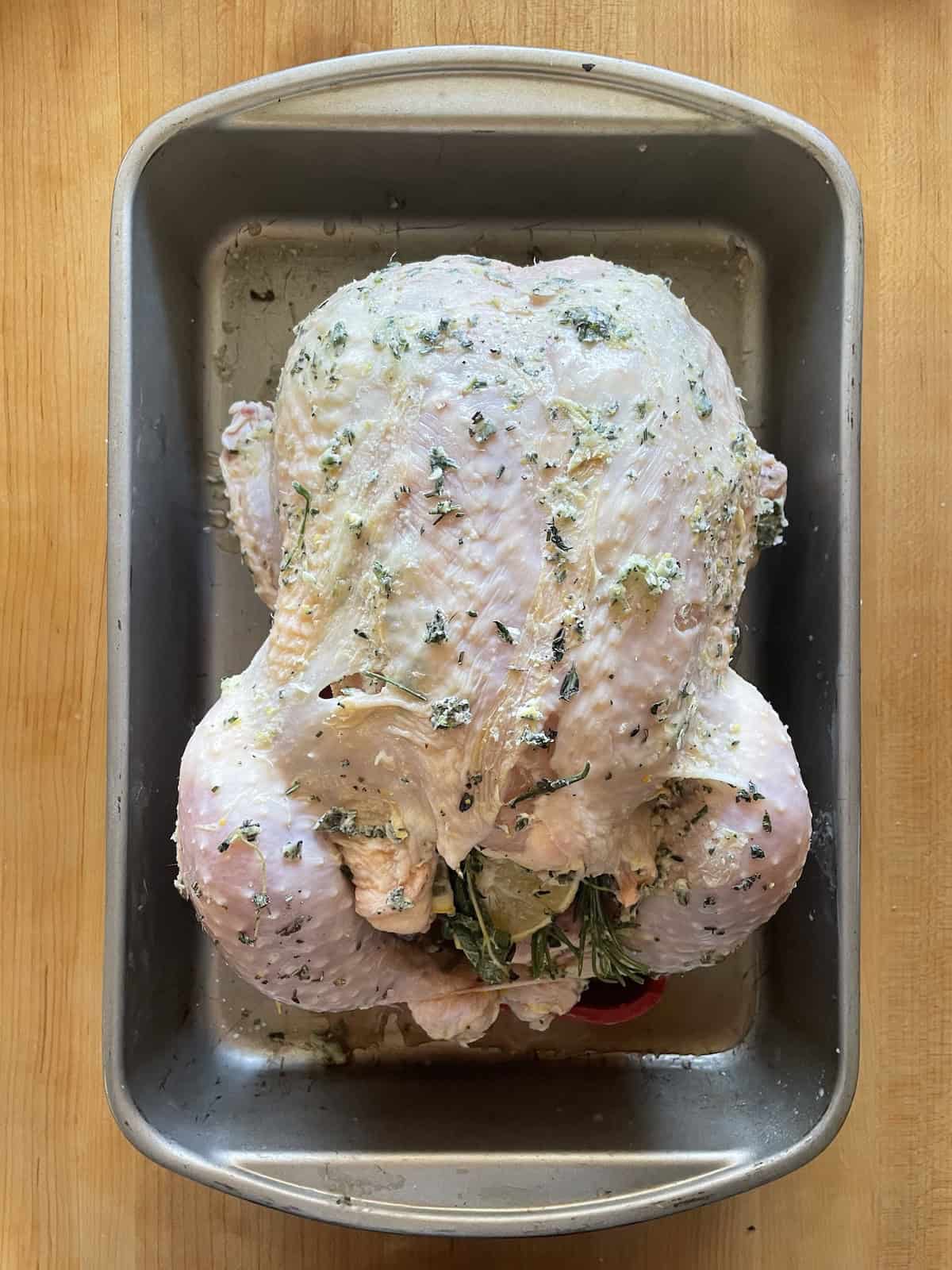
Place the quartered lemons, garlic and several sprigs of the herbs into the chicken cavity. Truss the chicken if desired.
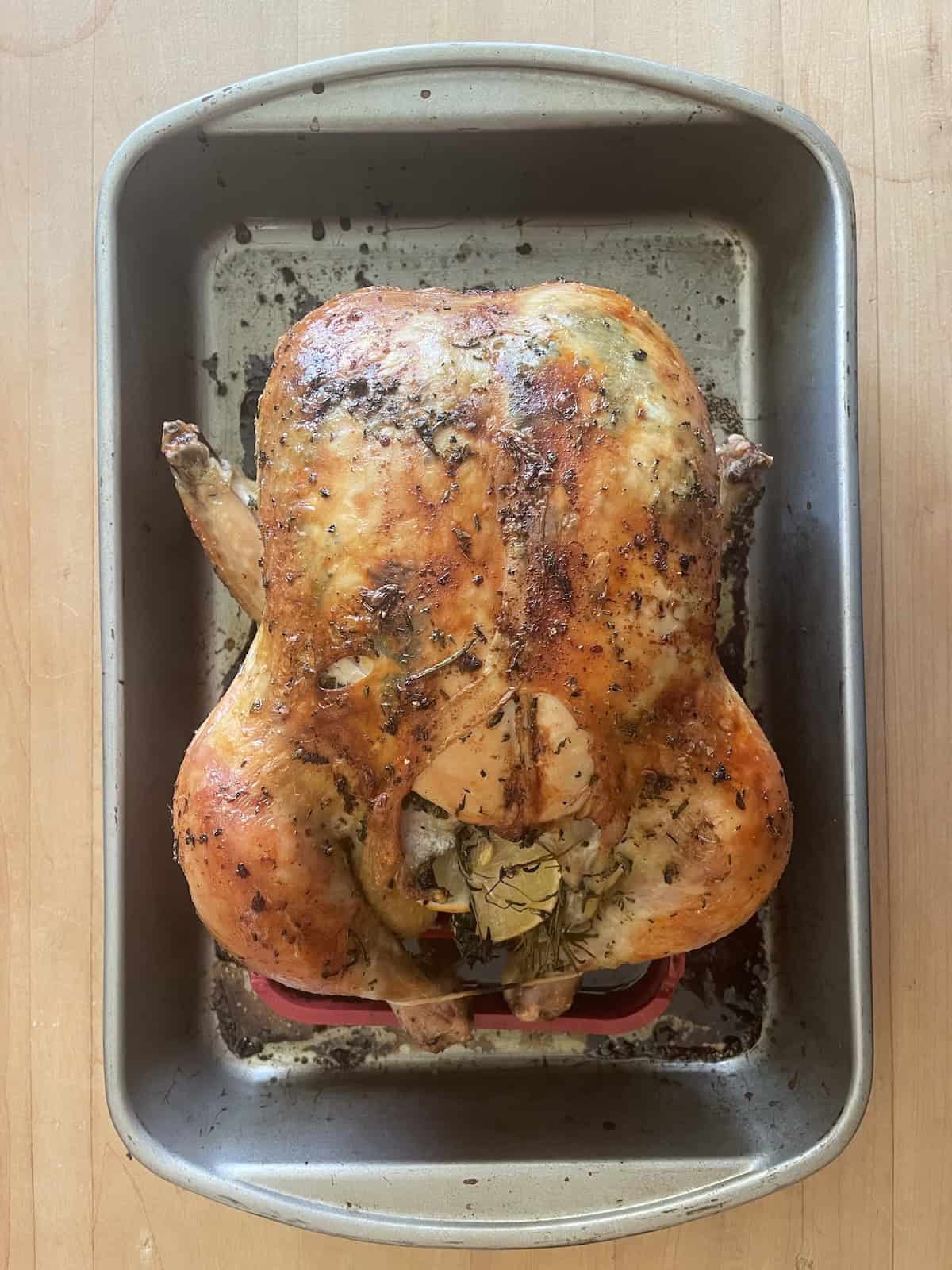
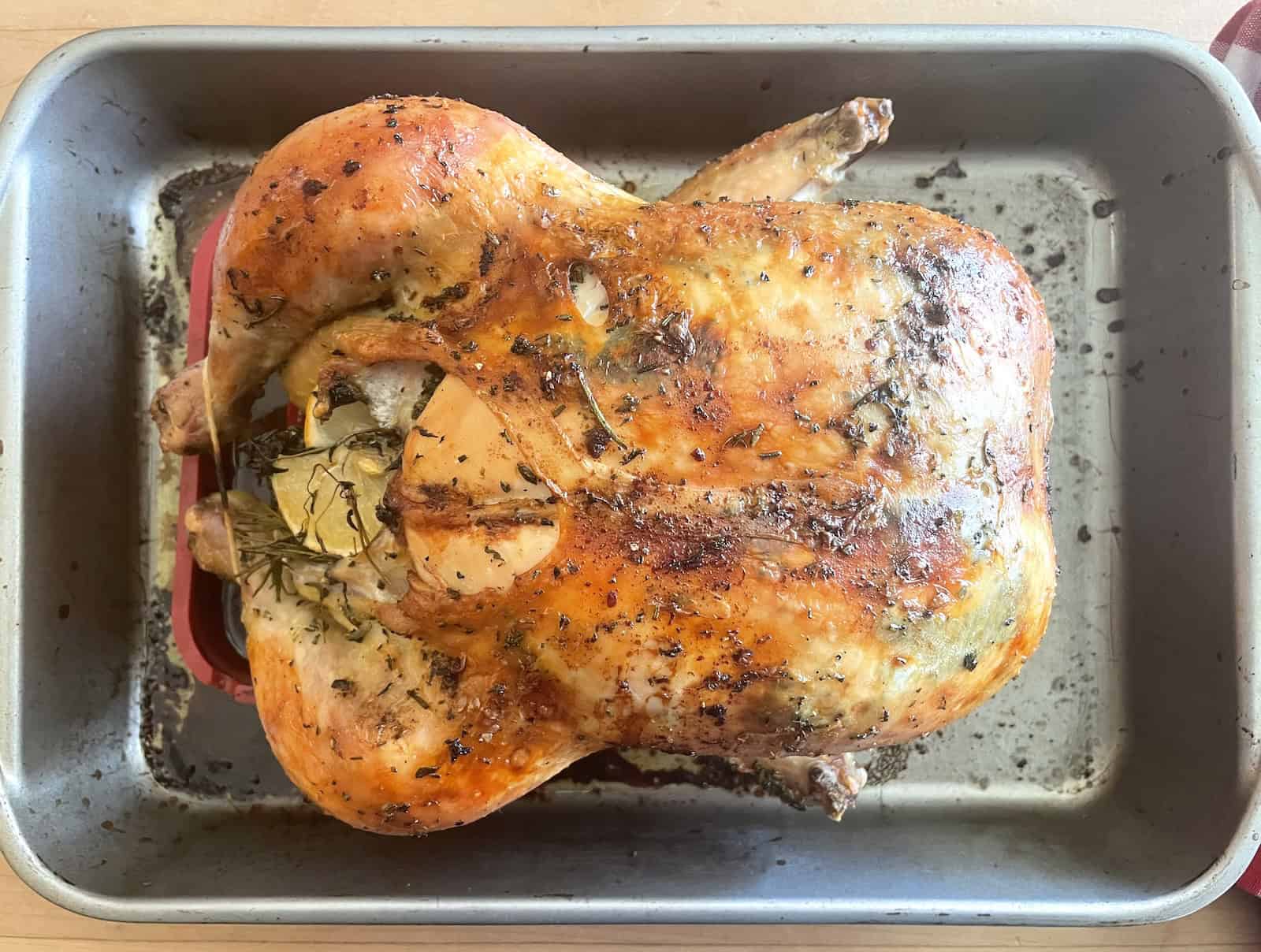
Place the chicken on top of the rack in the roasting pan. Roast for 1 hour to 1 hour and 15 minutes, basting every 15 minutes until the juices run clear and a meat thermometer placed into the thickest part of the thigh registers 165°F.
Transfer the chicken to a cutting board and allow to rest for 20 minutes. Remove the herbs and lemon quarters from the chicken cavity and carve the chicken as desired.
Hint: No rack to roast the olive brine chicken on? Simply invert two or three ramekins in the roasting pan and position the chicken on top.
Equipment
- small roasting pan or dish
- roasting rack or ramekins
- food processor (optional)
- airtight container or zipper bag
Storage
Store the fully cooked olive brine roast chicken in an airtight container in the refrigerator for up to 3 days. To reheat, wrap cut-up chicken in aluminum foil and reheat in an oven set to 250°F for 30 minutes. Unwrap during the last 5 to 10 minutes to allow for the skin to crisp.
Freeze leftover roast chicken pieces well wrapped in the freezer for up to two months. Or shred the roast brine chicken and store in a zipper bag for up to two months.
Recent Recipes

Trending Recipes

🍽️ Recipe

Olive Juice Brined Roast Chicken with Herb Butter
Equipment
- small roasting pan, cast iron skillet or baking dish
- roasting rack or two ramekins
- food processor
- airtight container or zipper bag
Ingredients
- 4- to 5- pound chicken
- 2 to 3 cups olive brine/juice (substitute pickle brine)
- 1 tablespoon sugar
- ¼ cup butter, room temperature
- 1 tablespoon minced fresh thyme, substitute 1 teaspoon dried, plus sprigs
- 1 tablespoon minced fresh rosemary, substitute 1 teaspoon dried, plus sprigs
- 1 tablespoon minced fresh sage, substitute 1 teaspoon dried, plus sprigs
- kosher salt and fresh ground pepper
- 1 lemon, quartered
- 4 garlic cloves, peeled
Instructions
- Preheat oven to 375°F. Remove giblets from chicken.
- Place chicken in an airtight container or zipper bag. Whisk sugar into the olive brine and pour over the chicken. Seal the container or bag and place in the refrigerator for 4 hour or overnight, turning halfway through.
- Remove from the refrigerator 30 minutes before prepping. Lightly salt and pepper the inside and outside of the chicken. (The brine has salt)
- In the bowl of a food processor (or by hand), mix the minced thyme, rosemary, sage and lemon zest with the butter until combined.
- Gently separate the skin from the chicken breast, creating a pocket. Spread a few tablespoons of herb butter evenly over the breast meat, followed by coating the outside of the chicken with remaining herb butter.
- Place the quartered lemons, garlic and several sprigs of the herbs into the chicken cavity. Truss the chicken if desired.
- Place a rack inside a roasting pan and position chicken on top. Roast for 1 hour to 1 hour and 15 minutes, basting every 15 minutes while roasting until the juices run clear and a meat thermometer placed into the thickest part of the thigh registers 165°F.
- Transfer the chicken to a cutting board and allow to rest for 20 minutes. Remove the herbs and lemon quarters from the chicken cavity and carve as desired.

Comments
No Comments