
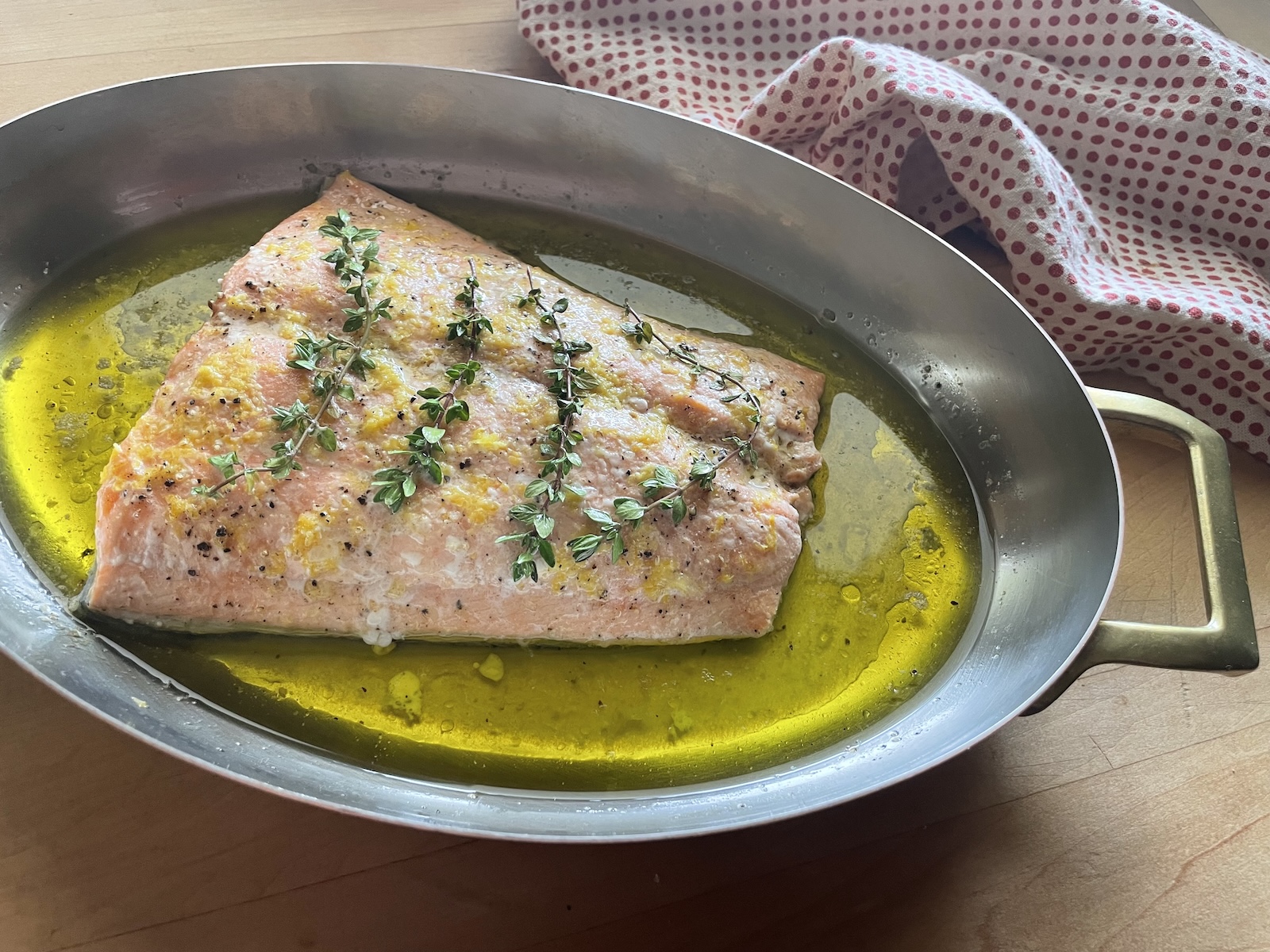
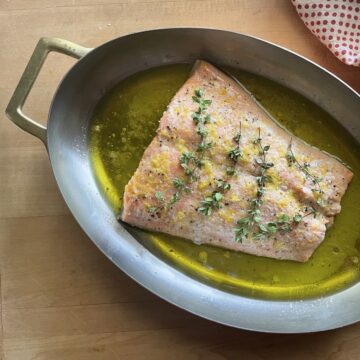
This incredibly easy to prepare Lemon and Olive Oil Poached Salmon is proof that it only takes a handful of quality ingredients to create something really special -- and versatile. Rich extra virgin olive oil, fresh lemon, fragrant thyme, and a beautiful salmon fillet come together in one baking dish to create a meal that's tender, flavorful, and practically foolproof.
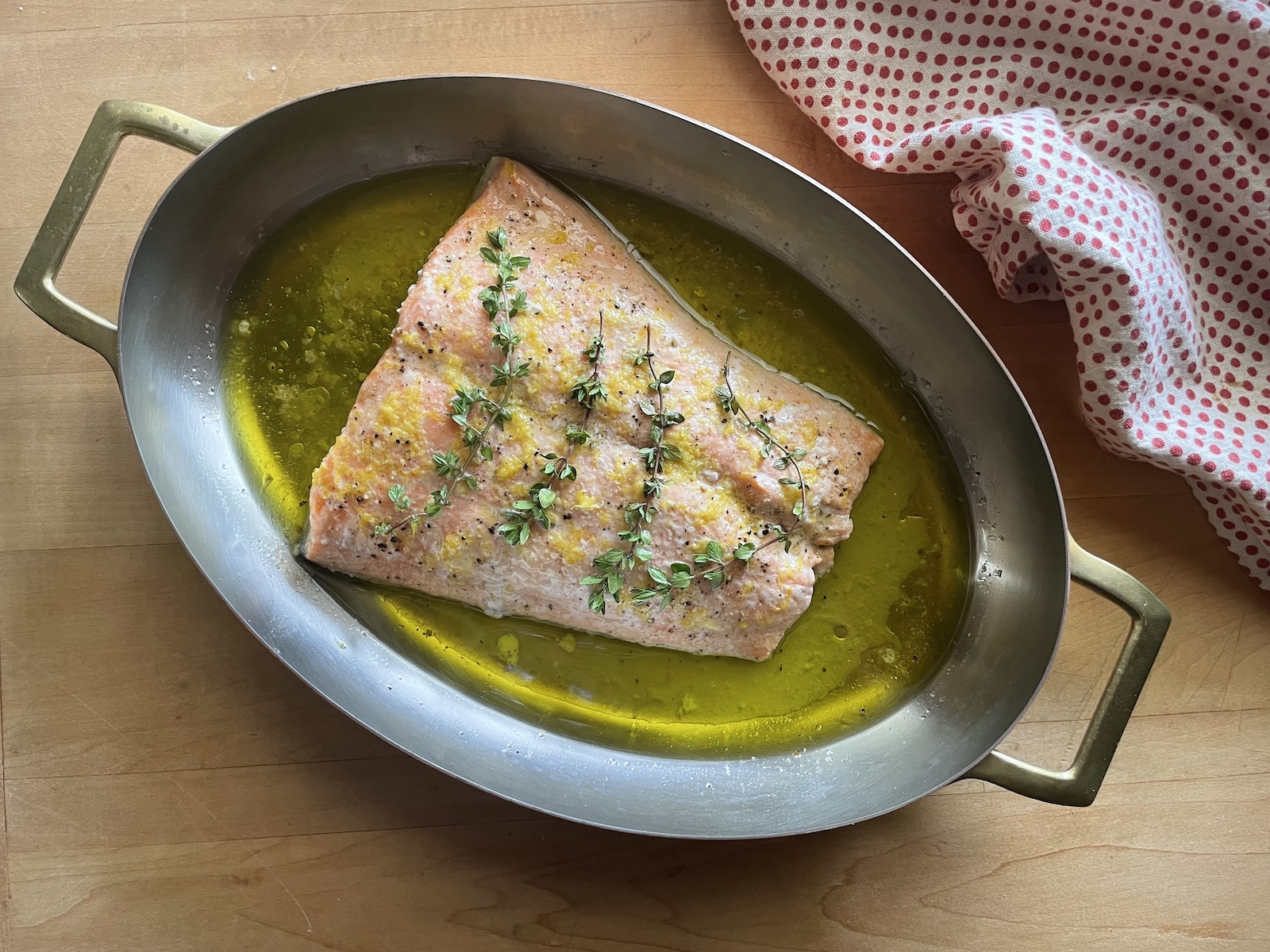
Unlike traditional poaching, where fish is gently cooked in water or broth, this oven method uses olive oil to surround the salmon, helping it cook slowly and evenly while keeping it incredibly moist. The olive oil doesn't overwhelm the fish; instead, it adds a silky richness that pairs beautifully with the bright citrus and earthy herbs.
I love this salmon because it is so incredibly versatile. Serve it warm alongside roasted new potatoes, steamed asparagus, sautéed green beans, or a crisp green salad. Leftovers are equally delicious flaked over mixed greens, topping a grain bowls, or layered onto toasted sourdough with a swipe of whipped ricotta. (I use it on avocado toast.)
Oh -- and don't discard the olive oil. The lemon and thyme infused olive oil left in the baking dish is full of flavor. Strain and refrigerate it for up to two days and then drizzle it over roasted vegetables, potatoes, or fresh greens, or use it to finish pasta or rice. I use both the salmon and the poaching oil it in my Mediterranean Orzo Salad with Lemon and Olive Oil Poached Salmon
Serving Suggestions
I love the effortless elegance of a perfectly cooked piece of salmon. Consider some of these sides from The Savory Tart when planning to include Lemon and Olive Oil Poached Salmon for your next dinner:
- Asparagus Mimosa -- Asparagus with herbs, Dijon, mustard and hard-cooked eggs
- Serve it over my Arugula and Orange Salad in Citrus Dressing
- Alongside Ruth's Creamy Dilled Cucumbers
- Or, serve it alongside my Lemon Ricotta Pasta with Roasted Cauliflower and Pistachios
Ingredients
Wild-caught salmon is my favorite choice for this recipe because of its firm texture and clean flavor, but any good-quality center-cut fillet works well (see substitutions below). Choosing a fillet that's about an inch thick helps ensure even cooking.
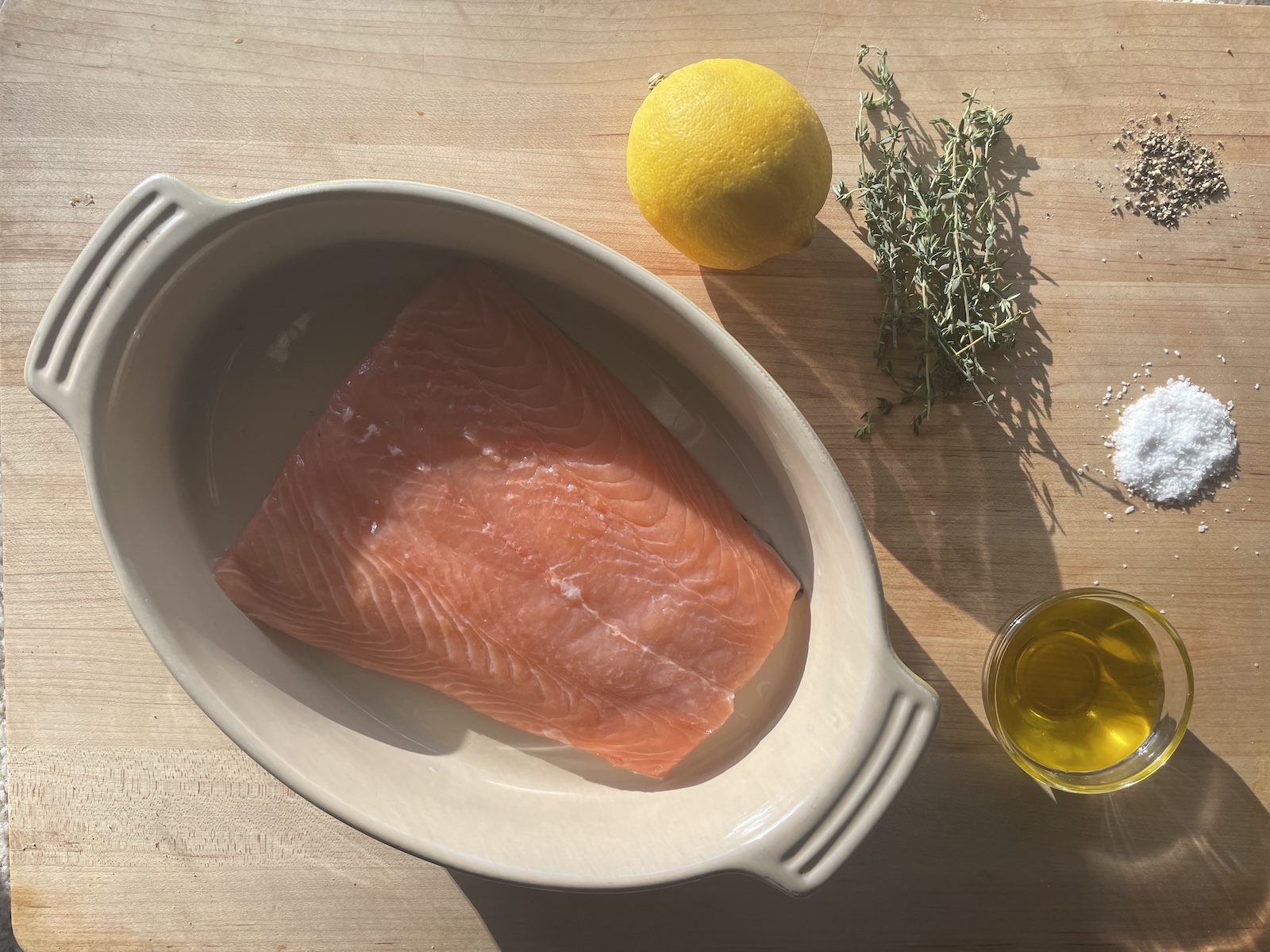
- center cut salmon fillet, preferably wild-caught
- good quality extra virgin olive oil
- kosher salt
- fresh ground pepper
- lemon
- thyme sprigs
See recipe card for quantities.
Jump to RecipeInstructions
The key to perfectly cooked salmon is keeping a close eye on the temperature. Since fillets can vary in thickness, start checking for doneness around the 10-minute mark. An instant-read thermometer is the easiest way to avoid overcooking.
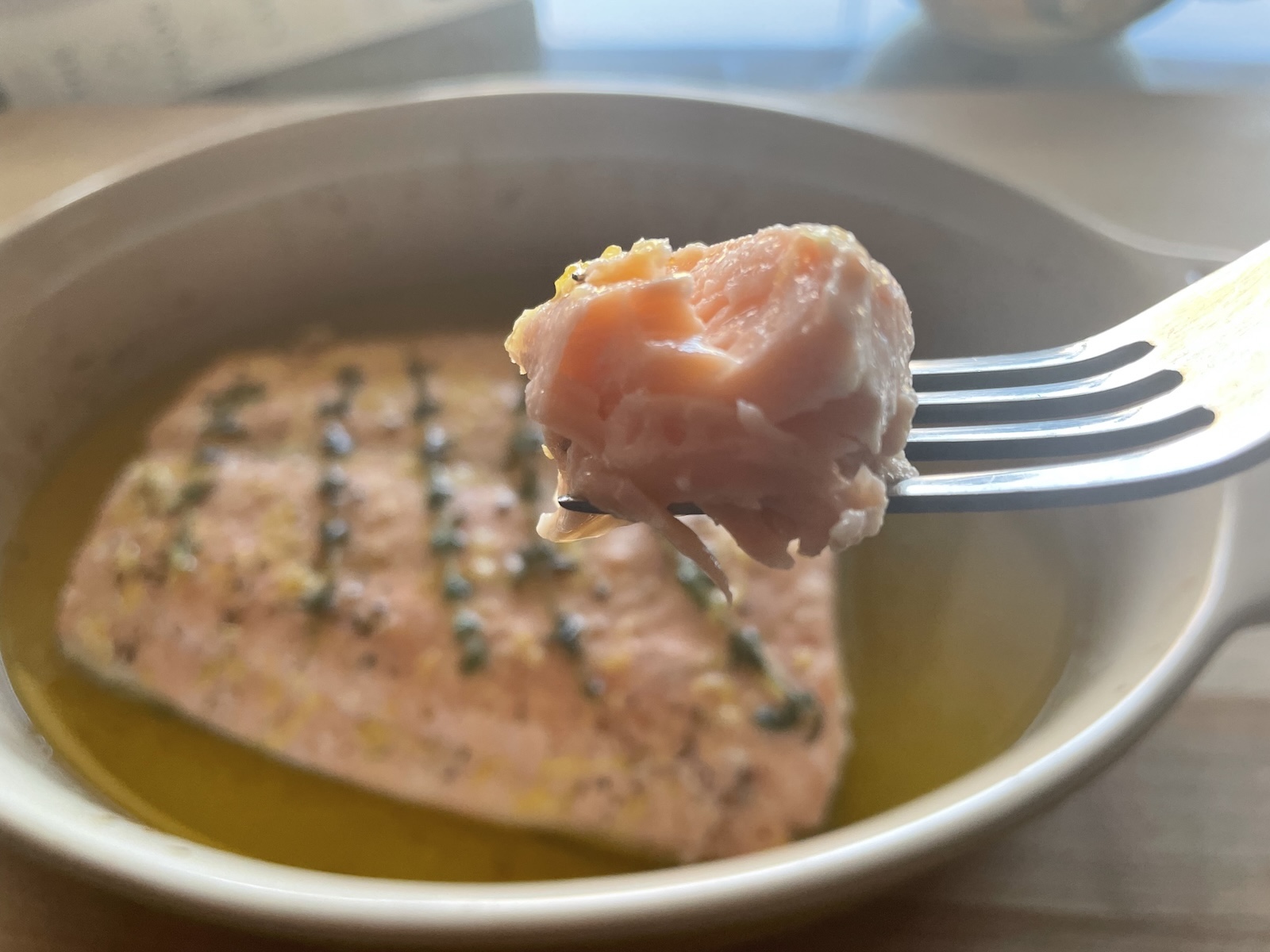
Remove the salmon from the oven when the thickest part reaches about 125°F, then let it rest under a loose tent of foil for five minutes. The residual heat will gently finish the cooking, leaving the fish flaky, buttery, and incredibly tender.
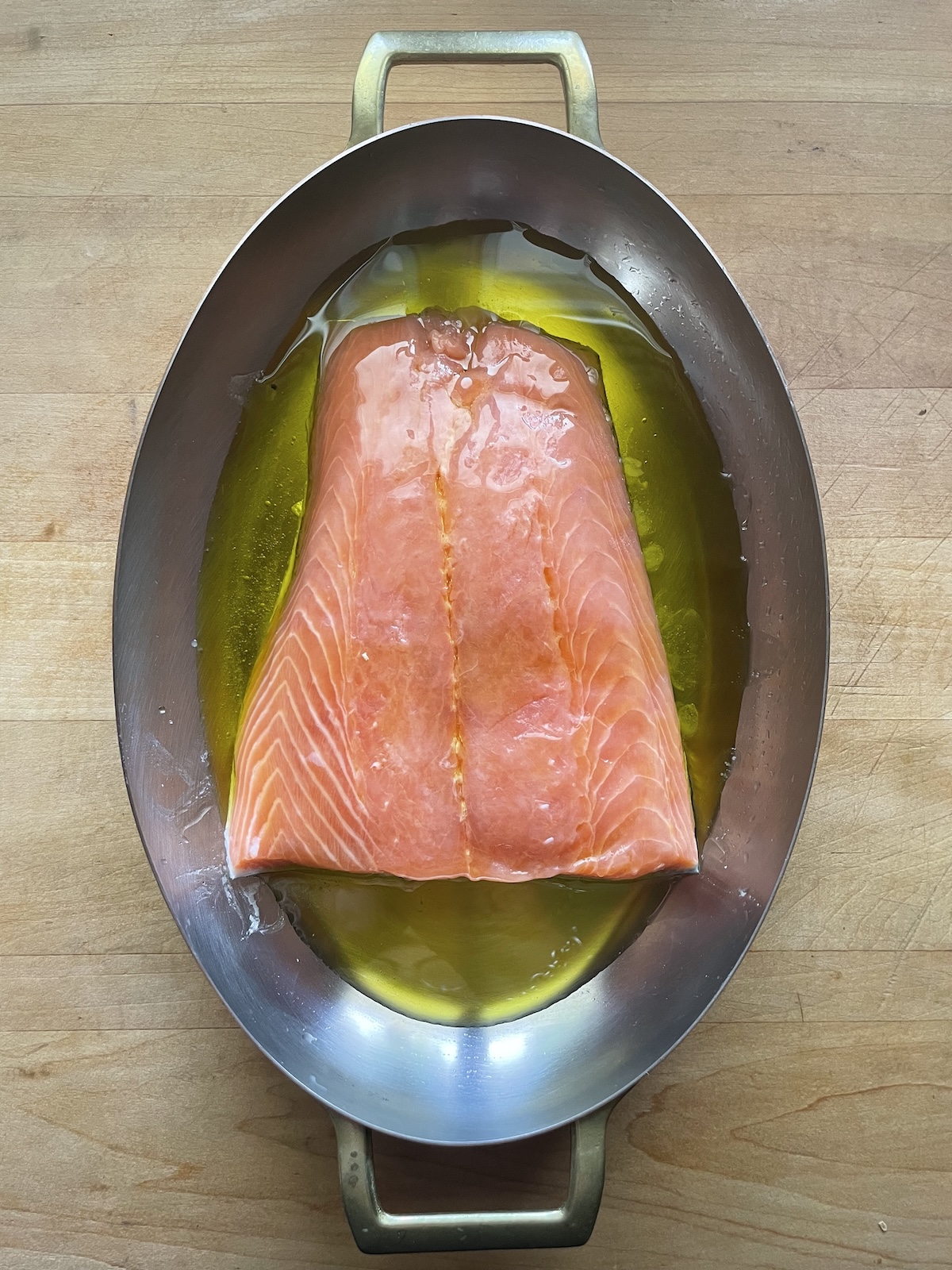
Preheat the oven to 325°F.
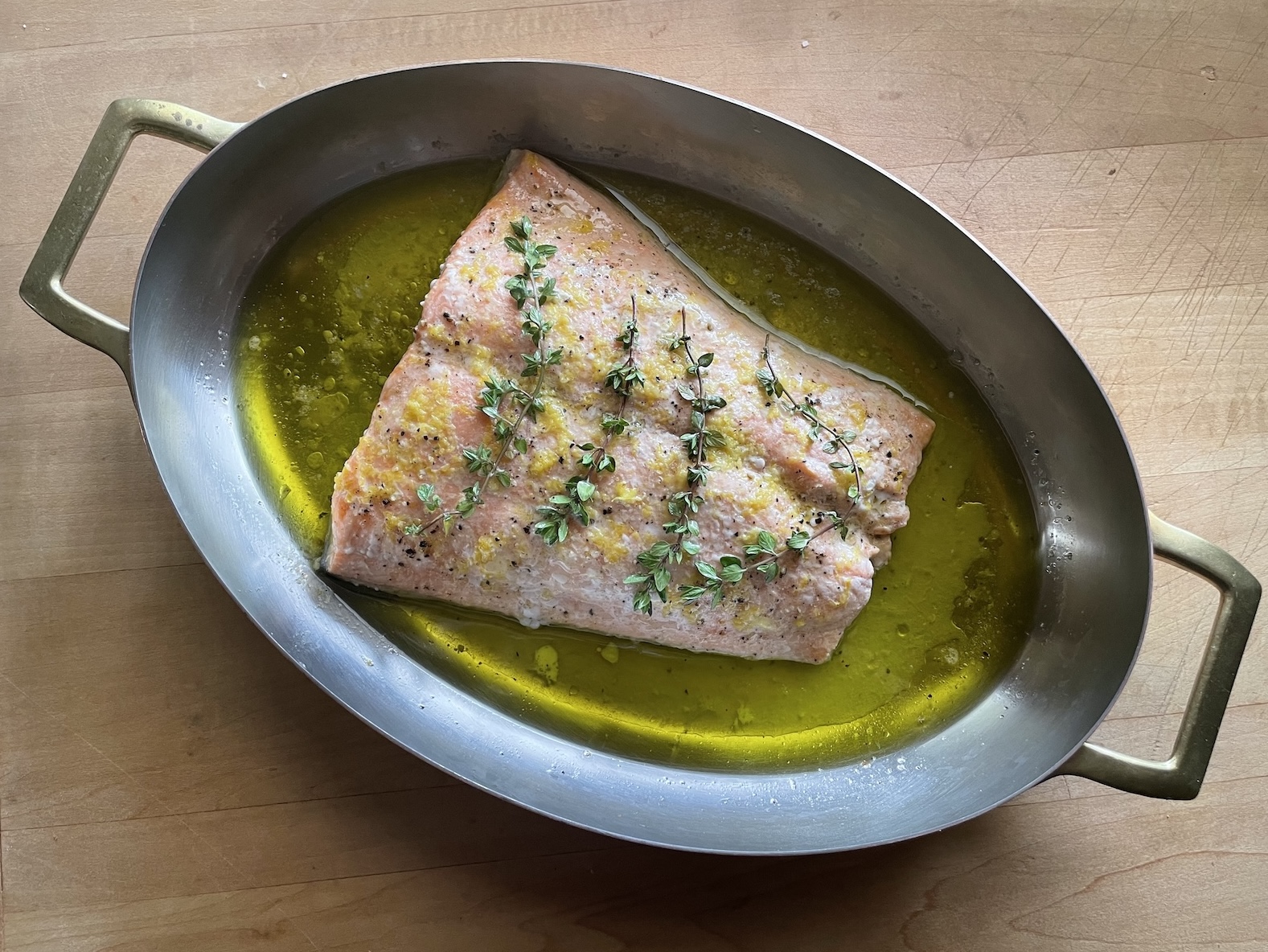
Place salmon fillet skin side down in an oven proof baking dish that the salmon fits in snugly.
Pour olive oil over and around salmon. Sprinkle salt and pepper over top of salmon.
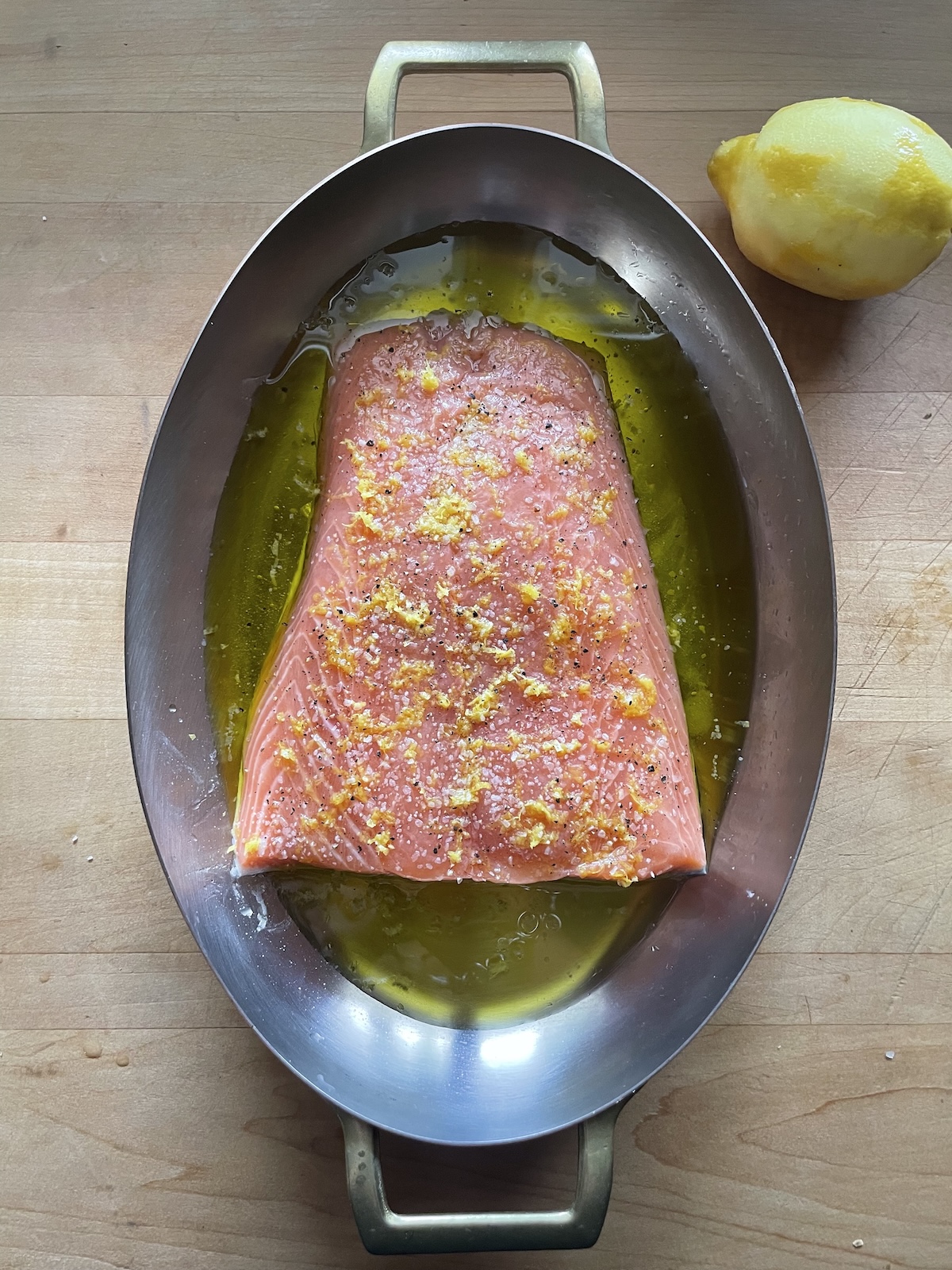
Zest lemon evenly over the top of the salmon. Squeeze lemon over the top of the salmon.
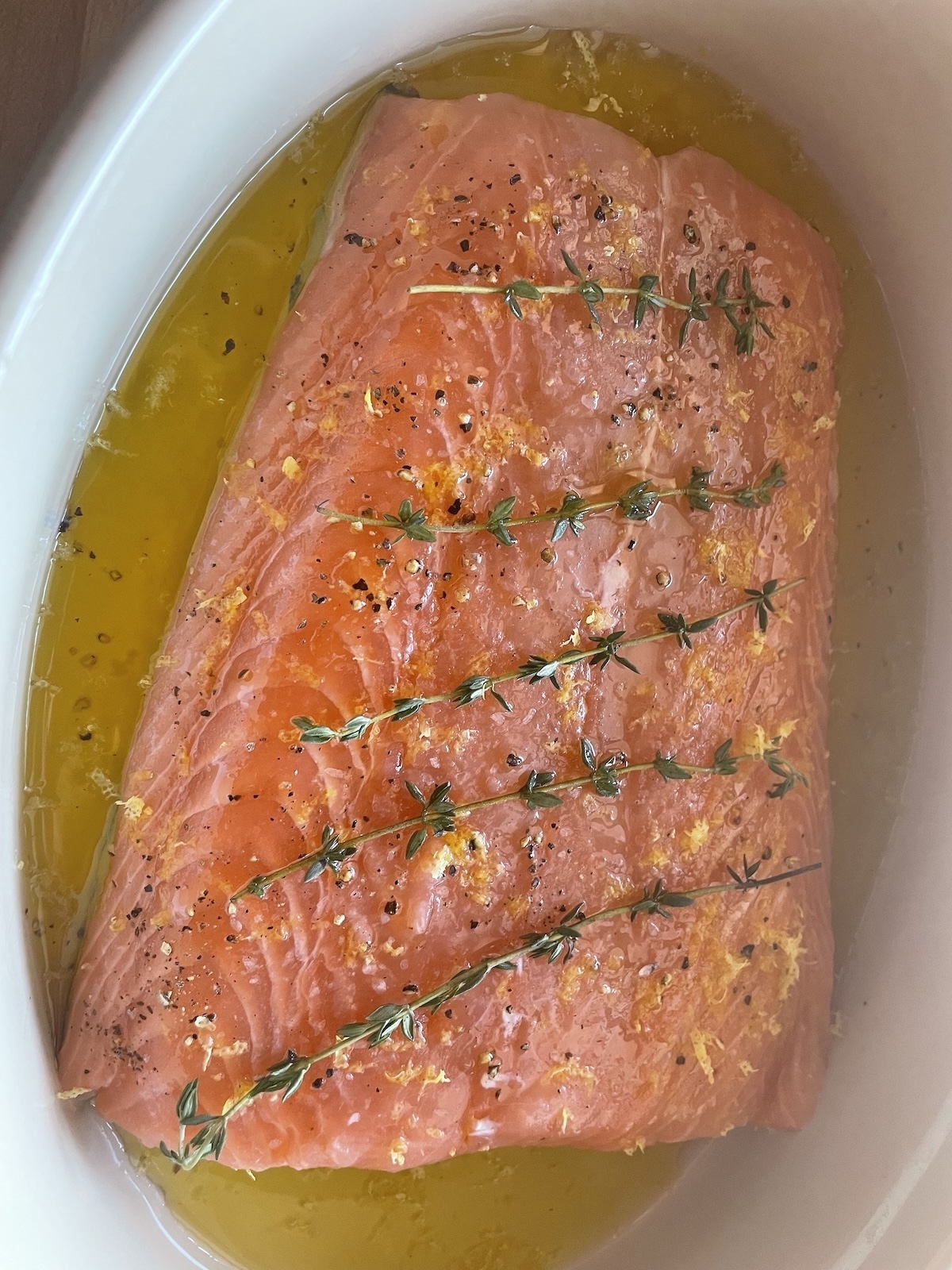
Top the salmon with thyme sprigs.
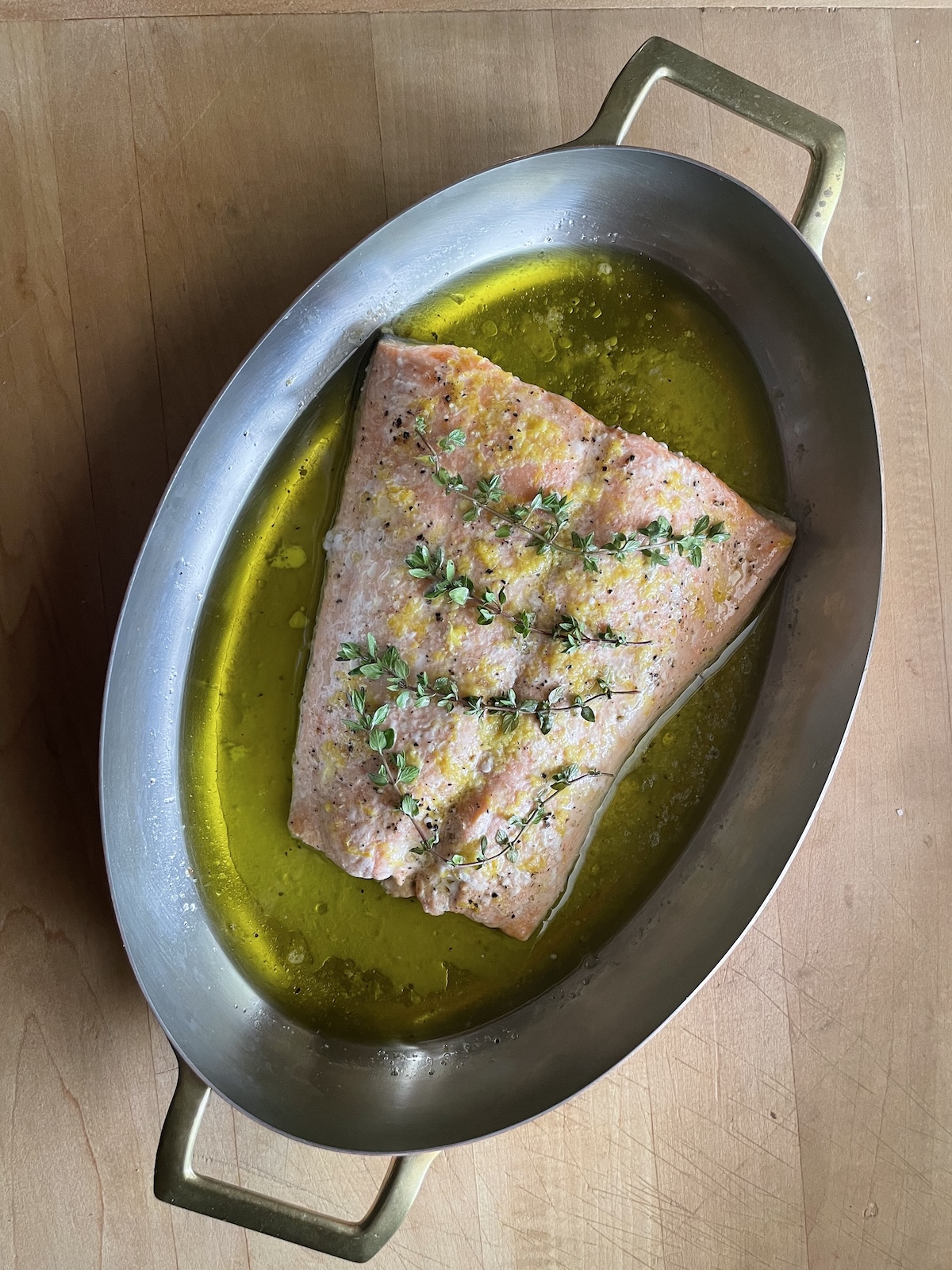
Bake the salmon until the fish flakes easily with a fork, about 20 minutes, depending on the thickness of the fillet. Check the salmon after 10 minutes. To prevent overcooking, use a thermometer to check for doneness. The thickest part of the salmon should read 125°F.
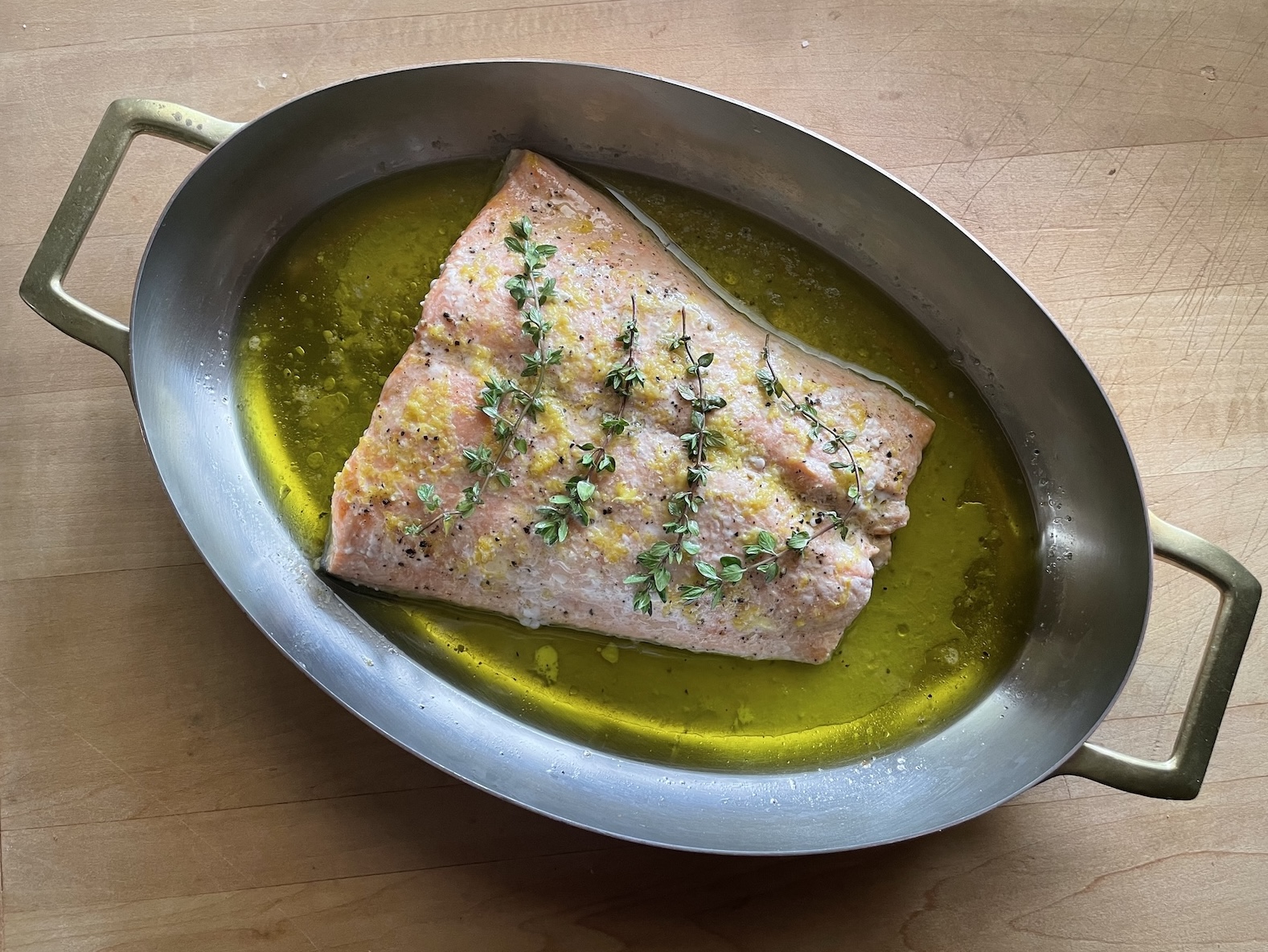
Remove from the oven and tent loosely with foil. Allow to rest for 5 minutes. The salmon will continue to cook during this time.
Tips for Success
- An instant-read thermometer is the most reliable way to achieve perfectly cooked salmon every time.
- Use a baking dish that fits the salmon snugly so the olive oil pools around the fillet. (You can even use a cake pan!)
- Fresh lemon zest adds bright citrus flavor without overpowering the fish, so don't skip it.
- Fresh thyme provides subtle herbal notes, but rosemary, dill and tarragon are lovely alternatives.
Substitutions
Several fish work beautifully as substitutes for salmon in this recipe. Since the gentle olive oil poaching method is designed to keep fish moist, it's best suited to firm, meaty fillets.
- Grouper – Another firm white fish that remains moist and flaky when gently baked.
- Arctic char – The closest substitute for salmon. It has a similar rich texture and mild flavor, making it an excellent replacement.
- Steelhead trout – Another top choice with its buttery texture and delicate flavor that is similar to salmon.
- Black cod (sablefish) – Exceptionally rich and tender with a silky texture. But keep in mind that because it's higher in fat, it may cook a bit quicker.
- Halibut – A firm white fish with a mild, clean flavor. It's leaner than salmon, but the olive oil helps keep it moist.
- Cod – Mild and flaky with a delicate texture. Reduce the cooking time slightly to prevent it from drying out.
- Sea bass – Buttery and tender with a mild flavor that pairs wonderfully with lemon and thyme.
- Mahi-mahi – Firm and meaty with a slightly sweet flavor. It holds up well to this cooking method.
Tips for cooking fish other than salmon
- Rich, fatty fish (Arctic char, steelhead trout, black cod): These cook similarly to salmon. Just make sure to check for doneness around 10 minutes. Cook to 125–130°F for a moist, tender texture.
- Lean white fish (halibut, cod, sea bass, grouper): Begin checking for doneness after 8–10 minutes, as they can overcook more quickly. Cook to 130–135°F, or until the fish flakes easily with a fork.
Equipment
- small low rimmed baking dish
- zester
Storage
Lemon and Olive Oil Poached Salmon stores beautifully. That is why I love making this to use throughout the week.
- Refrigerate: Allow the salmon to cool completely and transfer to an airtight container along with some of the poaching liquid. Refrigerate for up to three days.
- Freeze: Wrap the portions in plastic wrap and them place in a freezer safe container or zipper bat. Freeze for up to 2 months. Thaw overnight in the freezer before serving.
- Reheat: Reheat gently in an oven at 275°F for 10 to 15 minutes or until heated through. Serve it cold in salads, pasta, grain bowls, sandwiches or wraps.
Recent Recipes




Trending Recipes


🍽️Recipe
Lemon and Olive Oil Poached Salmon
Equipment
- low rimmed baking dish
- citrus zester
Ingredients
- 1 to 1-½ pounds center cut salmon fillet 1-inch thick preferably wild-caught
- ½ cup extra virgin olive oil
- ¾ teaspoon salt
- ¼ teaspoon fresh ground pepper
- zest and juice of one lemon
- Thyme sprigs
Instructions
- Preheat the oven to 325°F.
- Place salmon fillet skin side down in an oven proof baking dish that the salmon fits in snugly.
- Pour olive oil over and around salmon. Sprinkle salt and pepper over top of salmon. Zest lemon evenly over the top of the salmon. Squeeze lemon over the top of the salmon. Top the salmon with thyme sprigs.
- Bake the salmon until the fish flakes easily with a fork, about 20 minutes, depending on the thickness of the fillet. Check the salmon after 10 minutes. To prevent overcooking, use a thermometer to check for doneness. The thickest part of the salmon should read 125°F.
- Remove from the oven and tent loosely with foil. Allow to rest for 5 minutes. The salmon will continue to cook during this time.



Comments
No Comments